Words by Andrea Regina Esperon
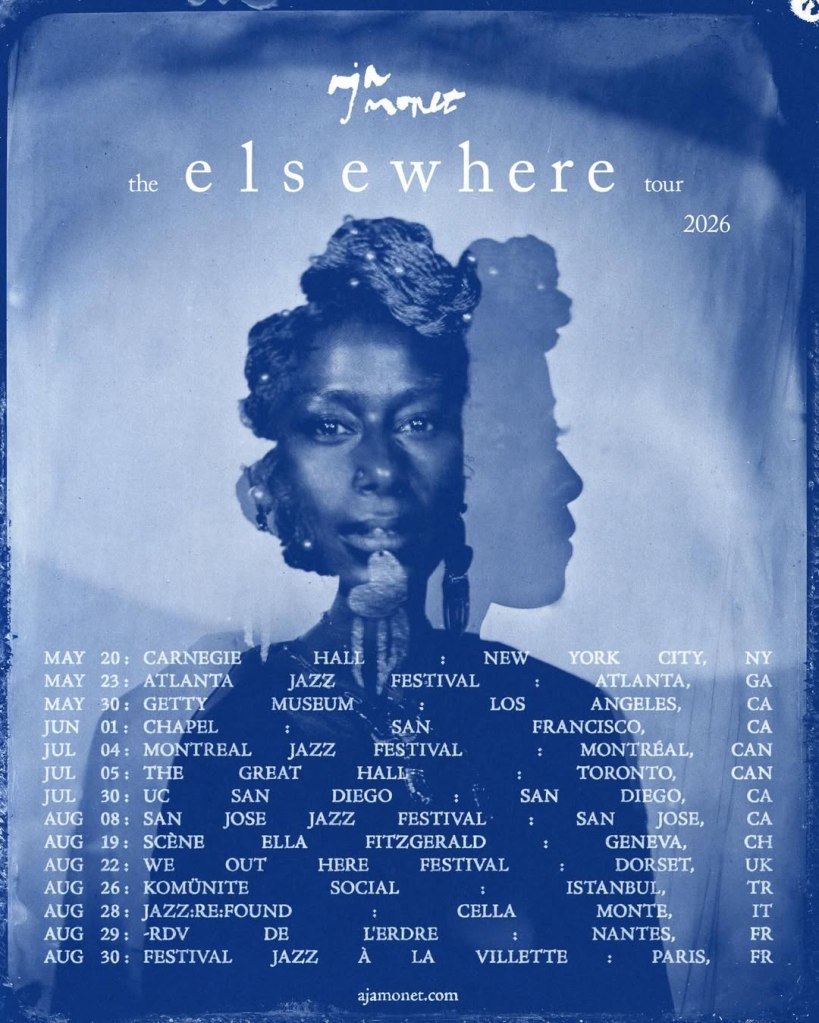
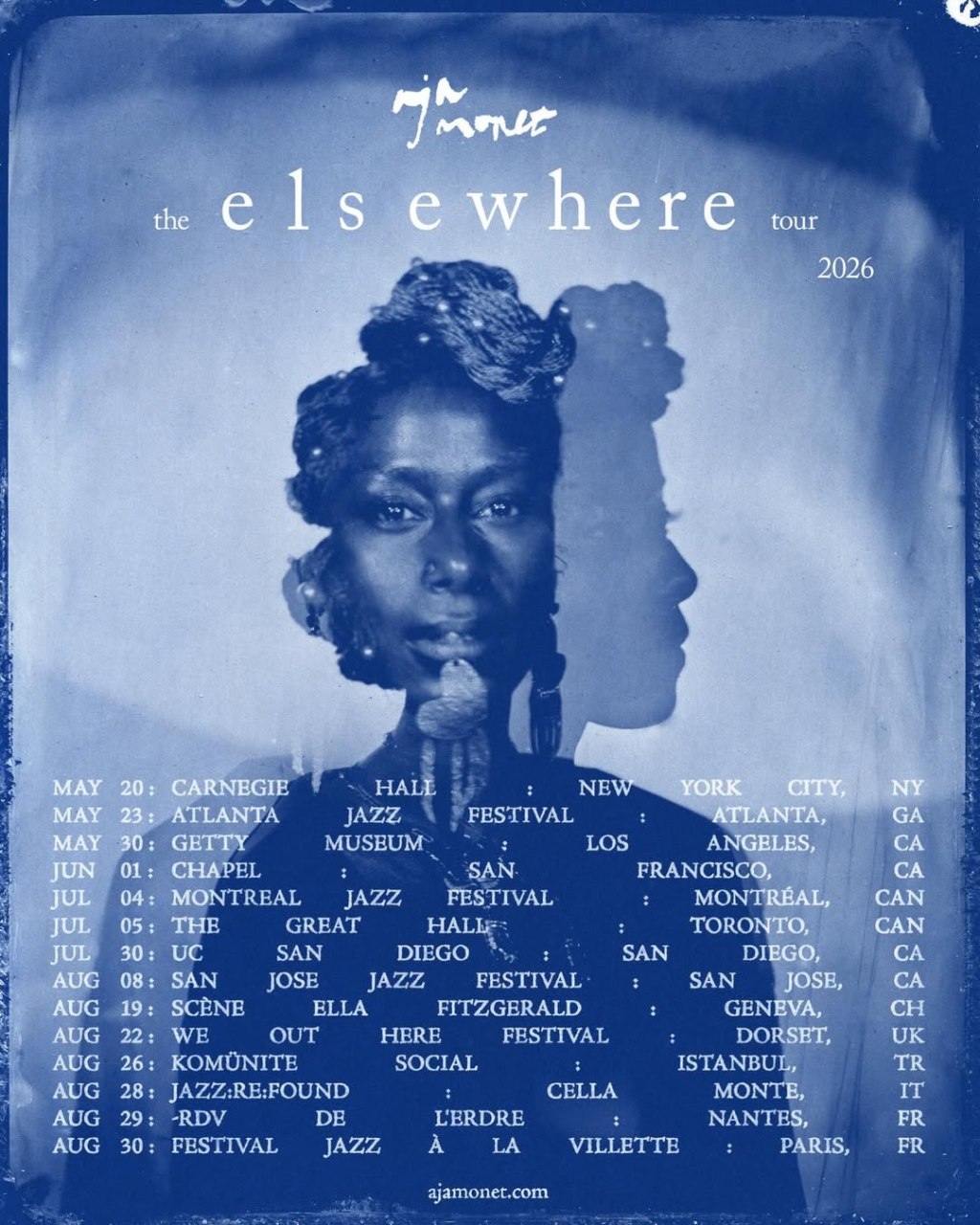
At Carnegie Hall, the room did not just fill, it gathered. Young and old audiences arrived dressed to the tens, embodying the spirit of Aja Monet long before she stepped on stage. There was a nervousness in the air before the show began, a quiet uncertainty over whether the venue would fully come alive for her debut. But by the time the lights dimmed, it was clear that it was a community.
The evening opened with the pianist laying down delicate notes before the rest of the ensemble slowly joined in. Then, Monet walked onto the stage. There was no dramatic entrance necessary, her presence alone shifted the entire hall.
From the beginning, Monet framed the night as a musical experiment. Performing new material for the first time, she reminded the audience that “the stage is a place to experiment.” That philosophy became the heartbeat of the evening. Not perfection, but process, not spectacle, but truth.
As she introduced “When the Poems Do What They Do,” she reflected on the origins of blending poetry with music. When the last record was released, she explained, few people understood what spoken word over live instrumentation could become. “I didn’t know it would give me power and meaning,” she admitted. “I always thought what we were doing was music.” The poem became both remembrance and gratitude as she honored her late friend Chad, whose favorite poem inspired the performance. In a room as historic as Carnegie Hall, she made memories feel alive.
That intimacy carried into “Unheard,” one of the first unreleased songs of the night. The audience erupted in cheers when she announced it was brand new, asking everyone to “bear with us [the ensemble].” But nothing about the performance felt uncertain. Her willingness to test unfinished emotions in real time made the room lean in even closer.
“love is a choosing” arrived like a meditation. Framed as an homage to heartbreak, the track layered soft water sounds beneath her words. “Love is a choosing, the choice of now,” she repeated, letting the phrase settle over the audience. The serenity of the arrangement contrasted the emotional heaviness beneath it. It became clear throughout the night that her new music is rooted in intentionality. “The poems are enough,” she explained. “I’m stepping in at a time where there’s many ways we can show up and use our gifts as service.”
That sense of urgency sharpened during “say it with your chest.” A persistent drum pattern pulsed beneath the poem like a racing heartbeat, symbolizing the cycles people feel while confronting hardship. The repetition never loosened, and neither did her message. “Let life lead you until the darling darkness,” Monet said, her voice steady against the percussion.
Then came one of the night’s most politically charged moments “for the Congo.” Stripped down to only Monet and a drummer, the performance demanded silence from the audience. She spoke openly about the exploitation and violence tied to the Congo, recalling how some people criticized her for discussing it publicly. But, she noted, that reaction proves exactly why the work matters. Holding up the metaphor of “the death machines in our palms,” she challenged the audience to confront the systems hidden behind everyday technology.
Throughout the evening, Monet emphasized surrealism as a major influence on the new record. “No one knows what they’re doing,” she said with a laugh. “That’s what I offer to you.” It was less a confession than permission, an invitation to experiment if you will. She thanked ancestors and elders for guiding her throughout the creative process, grounding the avant-garde spirit of the performance in collective memory.
“i know what i don’t know” embodied that experimentation fully. Moving between two microphones while typing on a typewriter mid-performance, she layered spoken words with fragmented phrases like “the joke of us” and “the sweat of ink.” The performance felt intentionally unfinished, yet was completely so.
Between songs, Monet spoke candidly about heartbreak, the California fires she lived through, and the emotional exhaustion of living through nonstop headlines. “We won’t have any politics if we don’t have a planet,” she warned, urging accountability in how society treats the earth. What made her speaking style so striking was its clarity. She never relied on filler language or vague platitudes. Every sentence landed with purpose. “It was lonely to speak about these topics,” she admitted. “The music we have is supposed to speak from the terms.”
That philosophy extended into how the music itself was made. She explained that one song took four days to record because every arrangement was built around the poems rather than the other way around. “Once you capture it, it’s not replaceable,” she said. Intention, for her, is clearly seen as preservation.
At one point, she jokingly pleaded with the audience to stream her favorite track from the album, lamenting that its video had been shadowbanned online. The crowd laughed along as she leaned further into absurdity. “Weirdness is the name of the game,” she declared. “What kind of community are you organizing if you don’t like talking to people?”
That energy exploded during “hollyweird,” where she performed through a megaphone that evoked the sound of police sirens echoing through Los Angeles streets. Beneath the humor sat a darker critique of performative activism and online posting culture. “People posting is the work,” she implied, “but it clearly doesn’t stop the genocide.” Snaps from the audience emerged to emphasize the message she preaches.
One of the most powerful moments of the night arrived with “to sister.” Before beginning, Monet stated plainly: “Femicide is on the rise.” She reframed sisterhood not as identity, but as action. “Sister is a verb,” she told the audience. “So let’s do sister right now.” The men exited the stage, leaving space for a more intimate moment led by her friend Mona, who opened with the repeated line: “Sometimes in my dreams the women are free.” Hearing it recited twice only deepened its weight. When the performance ended, the audience rose for a standing ovation.
By the time she reached “every media minute,” exhaustion and honesty blurred together. “I’m tired of everything here. Everything is a job, even love,” she confessed. Yet the room never felt hopeless.
Throughout the night, Monet repeatedly reminded the audience that live performance remains one of the few places where Black artists can fully express themselves without compromise. She encouraged people to continue pushing boundaries, shouting out poets and culture-makers in the crowd. Some audience members had apparently been following her work since she was fourteen. That longevity was visible in the emotional trust between artist and audience.
The closing moments carried both grief and hope. During “elsewhere,” she referenced the death of Sly Stone and shared how his daughter helped shape the recording by turning words into melody. The song was not about escape, she explained, but about remembering that people belong to one another. “We don’t have to subscribe to the reality we have,” she said. “We can go elsewhere.”
The night ultimately closed with “working class musicians,” the album’s lead single and final statement. By then, Carnegie Hall no longer felt like a prestigious institution hosting an artist’s debut. It felt like a living room for collective reflection. It became a place where poetry, grief, politics, joy, and experimentation could coexist without apology.
Monet released “the color of rain (2026)” on May 22 on all streaming platforms.