Words by Zachary Masone
Last March, in the midst of extreme media turmoil and reputational hemorrhaging, Ariana Grande released eternal sunshine. Conceived as a concept album, it was inspired by the 2004 movie Eternal Sunshine of the Spotless Mind, which follows two characters post-breakup participating in memory erasure procedures to forget about their troubled relationship history and each other completely. It was an apt concept for an album many anticipated to cover heavy emotional topics, such as the dissolution of a marriage, media scrutiny, and heartbreak. Grande had been coming off a whirlwind of public backlash following her separation from ex-husband, Dalton Gomez, and the muddling timeline of her coupling with fellow Wicked co-star and questionable new bachelor, Ethan Slater.
Many believed this upcoming album was going to be Grande’s response to the extremely antagonistic reaction to her unsubstantiated affair with Slater. How would one of the world’s biggest pop stars proceed following this wave of mass vitriol from the world — one unparalleled in her career? Grande, to that point, had not addressed any of the cheating allegations on social media or in interviews. Was this silence purely an admission of guilt on her behalf or an active decision to not feed into the indictments? The album was the chance to tell.
Once released, though, eternal sunshine wasn’t exactly about addressing the rumors of homewrecking or bashing an old partner; true, unblushing glimpses into her private life through her music remain rare. Rather than fueling speculation, Grande opts for an intentional wink, a playful nod, and a heap of positivity to shut down the conversation. Whether it’s wishing for an ex-lover to “still think fondly of [their] little life” on “don’t wanna break up again” or pronouncing the mantra, “Your business is yours, and mine is mine” on the lead single, “yes, and?”, Grande continues a long-standing tradition of refusing to linger in the negativity or let public narratives steer control of her creative direction. From the resilient uplift of “no tears left to cry” following the 2017 Manchester bombing at her Dangerous Woman World Tour, to the forgiving catharsis of “thank u, next” after her tumultuous relationship with Pete Davidson and the passing of Mac Miller, Grande has consistently transformed pain into empowerment on her own terms.
And this was no different on eternal sunshine. The album shies away from any personal details or true takedowns, and yet, this restraint works for Grande. Rather than using the extraneous materials to frame her story, Grande lets the music speak for itself. This tendency to let the work stand alone may also explain why she rarely revisits her discography to make deluxe editions of her albums. Prior to eternal sunshine, Grande had only released deluxe versions of her sophomore record, My Everything, and her sixth album, Positions — and even then, the additions felt underwhelming. On My Everything (Deluxe), the additions were so short you could hardly count the two extra songs as a deluxe edition, while you could tell that the tracks on Positions (Deluxe) were intentionally cut from the original tracklist.
All of her other albums endured untouched after their respective releases: no additions, no edits, and no rearrangements. Etched in stone, these albums stand as firsthand accounts of Grande’s personal and public life. This is the way Grande operates in her music. She’s never one to dwell on an era or album; once released, the album becomes a part of her artistic mythology and she moves on. The gap between her fourth studio album, Sweetener, and her fifth, thank u, next, was only six months. Aside from My Everything, the push for singles usually ends almost immediately after the album comes out. And after Eternal Sunshine was released, the publicization around the project almost completely died. Grande retreated back from the public eye, gearing up for the worldwide promotional tour for Wicked.
And yet, rumblings of an eternal sunshine deluxe bubbled underneath the summer of 2024 and into the next year. In July, Grande revealed that a deluxe version of the album was in the works, and by the time she attended the Golden Globes in January 2025, she stated that there was an “attachment” to Eternal Sunshine in the vault, awaiting the perfect time for release. A “Brighter Days” hotline was even shared on Grande’s Instagram story (inspired by the memory erasure firm, Lacuna, from Eternal Sunshine of the Spotless Mind) that teased the deluxe further. With this momentum, it played like an entirely new era, with the budget and promotion of a separate album cycle rather than just a deluxe edition.
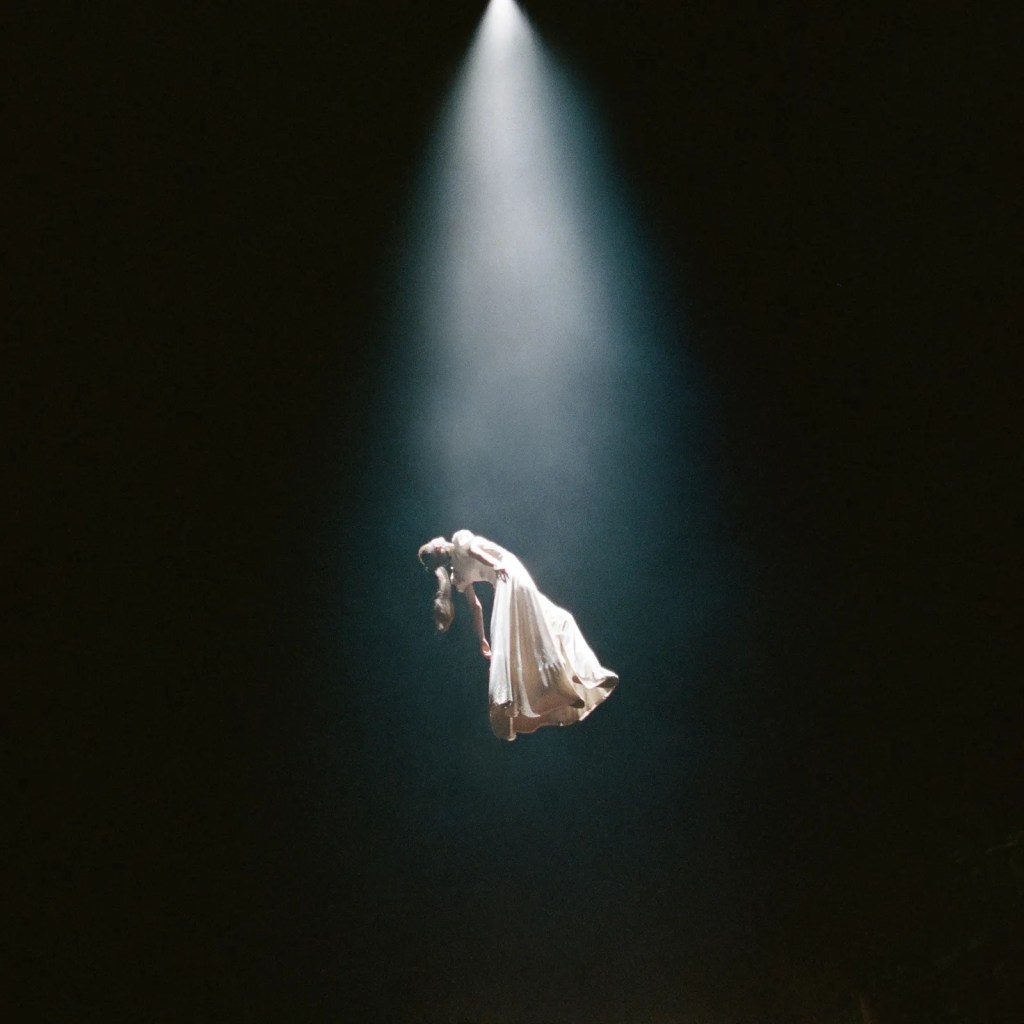
On March 10, it was announced that eternal sunshine: brighter days ahead, the official title of the deluxe, would contain six new tracks and an accompanying short film (Grande had clearly taken inspiration from her experience on the set of Wicked), co-directed by Grande herself. While Positions (Deluxe) arrived with little fanfare in the midst of the COVID-19 pandemic (containing songs with no bridges and, controversially, the same album cover as the standard edition), brighter days ahead already seemed like a legitimate effort on Grande’s part to revitalize the eternal sunshine era and breathe new life to the work, rather than it just being an afterthought. This time, it felt like a continuation, a response, and a signal that there was still more to say.
The new tracks on the deluxe paint an altered picture of the world of eternal sunshine, one that is both more atmospheric and slightly introspective. It’s almost as if Grande had been testing the waters with the standard album, seeing if the public conversation came back to her side (even addressing this on the number-one hit “we can’t be friends (wait for your love),” and then, once the temperature felt right, letting the deluxe tracks act as a deeper exhale. For the most part, they are less guarded, with further contemplation and personal details. The added songs work to reveal that Grande, a year after the release of Eternal Sunshine, is someone still reckoning with the issues covered on the original album. These six new tracks are some of the most intimate in Grande’s discography, matching the original tracks in quality while also feeling like a separate entity. They are the quiet processing that follows the storm, the dusk that follows a cold sunset, the blues that follow the golden-reds.
The lead single for the deluxe, “twilight zone,” is a twin to “we can’t be friends.” Both tracks’ production mirror one another, with dreamy synths and delicate vocals, harmonized and stacked on top of one another. They easily fit into the realm of Robyn’s “Dancing on my Own,” with Grande inviting us to cry on the dancefloor. On “we can’t be friends,” Grande sings simultaneously about her relationship with the public and with her romantic relationship. In the aftermath of its end, Grande declares that she’ll wait for the love that was once hers again. But, on “twilight zone,” it seems as if this waiting has lasted a lifetime; her hope had eventually curdled. Grande sings from a farther, more disillusioned place, reminiscing on the relationship that she wonders was even real. “Did I dream the whole thing? Was I just a nightmare?” Grande warbles from the opening line, as if just waking up. It’s a mature and somber perspective; dissolutions of relationships are two-way streets, and Grande doesn’t shy away from her part in the breakdown. Was she a nightmare to someone else? If the scene is black-and-white, like the original “Twilight Zone” television series, then she’s in the “gray one.” Her actions, and the actions of her ex-partner, are morally ambiguous. There was no clear villain or hero; just two flawed people seeking answers as to why their relationship didn’t work. Yet, Grande remains firm in that she doesn’t miss this person. The perspective is not one from longing, but from clarity; it’s clear that the Twilight Zone is no longer a place to return to, but just a place she used to live.
In the second verse of “twilight zone,” Grande breaks the fourth wall, wondering why she still protects the person who broke her heart and if she should pretend her songs aren’t about them. It’s a candid moment, especially for Grande, who rarely, if ever, addresses the subjects of her songs. And it’s in this instance where I find the need for brighter days ahead. As discussed prior, Grande has never been one for deluxe albums, and yet, the story of eternal sunshine, at least to me, remained unfinished. There needed to be a reflection of the musings developed on the original album from a vantage point removed. Often, the most traumatic periods of our lives are seen through a kaleidoscope at various moments in our lifetime, and a contemplation of the events of eternal sunshine from a Grande unfastened seemed like a perfect continuation of the story left off on “ordinary things,” the closing track from the standard album.
Not all of the deluxe tracks are tremendously personal, though, and “warm” and “dandelion” act as buffers between the first two and last two songs. “dandelion” is probably the most out-of-left-field inclusion on the deluxe. While most of the tracks occupy a synthy dance-pop sonic production, “dandelion” unexpectedly combines jazz horns and a thumping trap-pop beat. While the title of the song might have suggested innocence, perhaps Grande sitting in an open field wishing upon dandelion puffs, the beat and lyrics are more akin to Grande’s earlier works on thank u, next and Positions; Grande croons for her partner to wish for whatever they want as a pseudo bedroom-genie. It’s an instant standout, perhaps because it stands in such stark contrast to the other deluxe tracks, which veer into the softer, more introspective side. “warm” is another high-quality inclusion, infusing the dance-pop drum loop of “Break Free” with subdued, strumming guitars and airy synths. It’s lyrically similar to “supernatural,” with Grande singing of being “high in the exosphere” where she’s now “safe and sound.” It’s a sensual track, showing the solace and refuge Grande has found in a new relationship.
Throughout all the deluxe tracks, Grande vocals are once again a highlight. Whether it’s the bridge of “warm,” the chorus of “dandelion,” or the supplemental verse in “intro (end of the world) – extended,” Grande’s voice essentially acts as another instrument (or a chorus of them). Her ability to stack harmonies has only gotten stronger with each subsequent record, and on eternal sunshine: brighter days ahead, this pure skill is on full display. Her vocals are smooth and buttery, yet agile and dynamic, effortlessly weaving between whispered falsettos and full-throated belts. While some might long for more intense vocal prowess, the restraint Grande shows works to the benefit of the record as a whole. eternal sunshine, with its glossy production and distraught lyricism, would stand to lose if Grande performed vocal acrobatics similar to her past records, with some of the emotional nuance lost to sheer technicality. The sparseness of her true vocal abilities makes their limited inclusion all the more powerful, like on the pre-chorus of “past life” or the chorus of closer “Hampstead,” reminding the listener that Grande is first and foremost a vocalist at her peak (see the Wicked soundtrack for more proof of this).
Grande also included an extended version of the original intro from the standard edition, which found modest virality on TikTok. Almost like with a flip of a switch, what was once a longing rumination on “intro (end of the world), a deliberation on whether a relationship was right or wrong, whether the person would remain loyal until the day the world ended, “intro (end of the world) – extended” is transformed into a haunting wish for a partner to see things from Grande’s perspective. She has wondered whether that person would endure with her through thick and thin, and after traversing the universe of eternal sunshine and finding out they don’t, Grande goes back to the beginning, expanding upon the intro track and “jump[ing] into [the] skin” of the other person. Grande even references her own engagement and the regret Gomez experienced after asking Grande to marry him: “Would you still be here pretending you still like me? Pretending you don’t regret not thinking before asking?” She sought out the “right relationship”, thought she had entered one, and discovered that she was wrong. What if this happens again? What if she listens to Nonna’s advice, the supposed answer to the question posed in the opening line of the album (“How can I tell if I’m in the right relationship?”), at the end of “ordinary things,” and once again discovers that she was mistaken?
It’s an evocative question and one that perfectly fits into the sonic landscape of brighter days ahead. It’s this unease, this uncertainty, that lingers throughout the deluxe tracks. “I used to think you were the medicine, but you were just code blue,” Grande sings in “past life.” On “twilight zone,” “Not that I miss you, I don’t / I just can’t believe you happened.” And on the final track, “Hampstead,” “I don’t remember too much of the last year.” How can one be so sure of someone, and then unearth it was all a lie? How does this fundamentally shake a worldview, and how long do these feelings loiter? This is the world that brighter days ahead inhabits, and the exploration of this world is the reason why the deluxe is a necessary inclusion in the eternal Sunshine saga.
On “Hampstead,” Grande succinctly closes out the album and era. Grande had previously stated that this track was one of her favorites that she’s ever written, and after hearing it, it’s no surprise why. It is a muddy piano-led ballad, simultaneously both muted and theatrical. Grande sings softly on the verses, referencing a “pub back in Hampstead,” an area in London where Grande lived while filming Wicked and where her marriage fell apart. “I’d rather be seen and alive than dying by your point of view,” she belts in the chorus, a pointed lyric that clearly references the last track on Positions, “pov.” On “pov,” Grande sang, “‘Cause nobody ever loved me like you do, I’d love to see me from your point of view.” Now, years later, that sentiment has turned on its head. It is an imperative contemplation on the past few years of her life, with her voice effortlessly belting on the chorus in an emotional plea. “Fear me, stranger, a little bit of sugar, danger,” she yearns, as the piano and strings build in the back. It’s perhaps the most stirring and cinematic Grande has ever sounded, apt for the closing track on her most personal album to date. And in the end, the last lyrics on brighter days ahead are almost whispered as the piano fades out: “I do, I do, I do, I do.” eternal sunshine: brighter days ahead is a victory lap for Grande. After achieving two No. 1 singles, a No. 1 album, a No. 1 movie, and a slew of prestigious acting nominations (including for an Academy Award for Best Supporting Actress) for her work in Wicked as Glinda, Grande could’ve taken the year off until the second part of Wicked rolls around in November. Instead, she went back to the studio, perhaps inspired by her viral performance at the 2024 Met Gala, and rounded out the story of her critically acclaimed and Grammy nominated seventh studio album. brighter days ahead is personal, poignant, and worthy of its inclusion in her canon. The story of eternal sunshine is now complete, with the deluxe tracks doing nothing but enhance and amend the original narrative. While the lack of vocals or productional innovation may rub some the wrong way, Grande, even at her least personal or inventive, is still leagues ahead of her peers. Her ear for melodies, harmonies, and vocal stacking alone make any track she releases notable and deserving of a listen. With brighter days ahead, Grande doesn’t just close the chapter on the entire eternal sunshine era — she signs it with intent, reminding us that even in her quietest, most introspective and vulnerable moments, she’s still a force to be reckoned with.
 Loudspeaker Collective